

Dealer:
Eden Hazard
Begijnhof, 8000 Brugge, Belgium
- Transmission 7-Speed Automatic
- |
- Drive Rear Wheel Drive
- |
- Mileage n/a
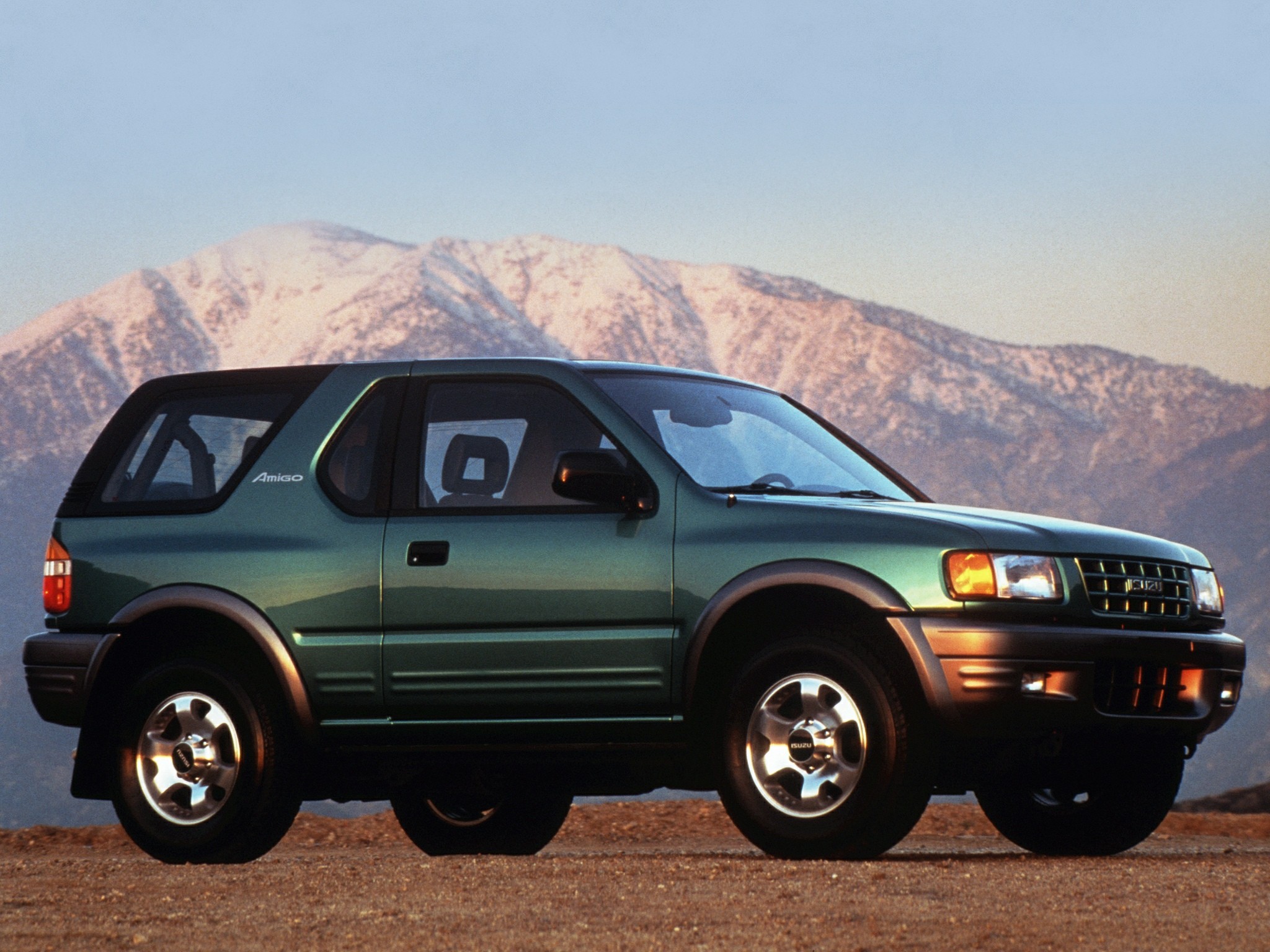
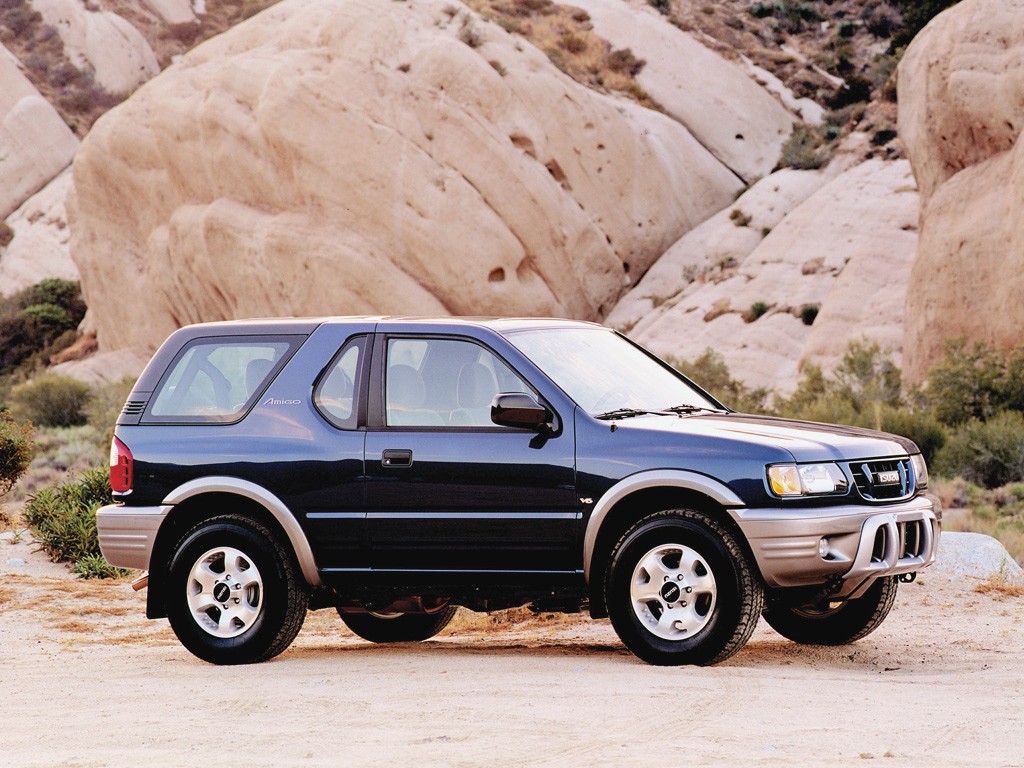

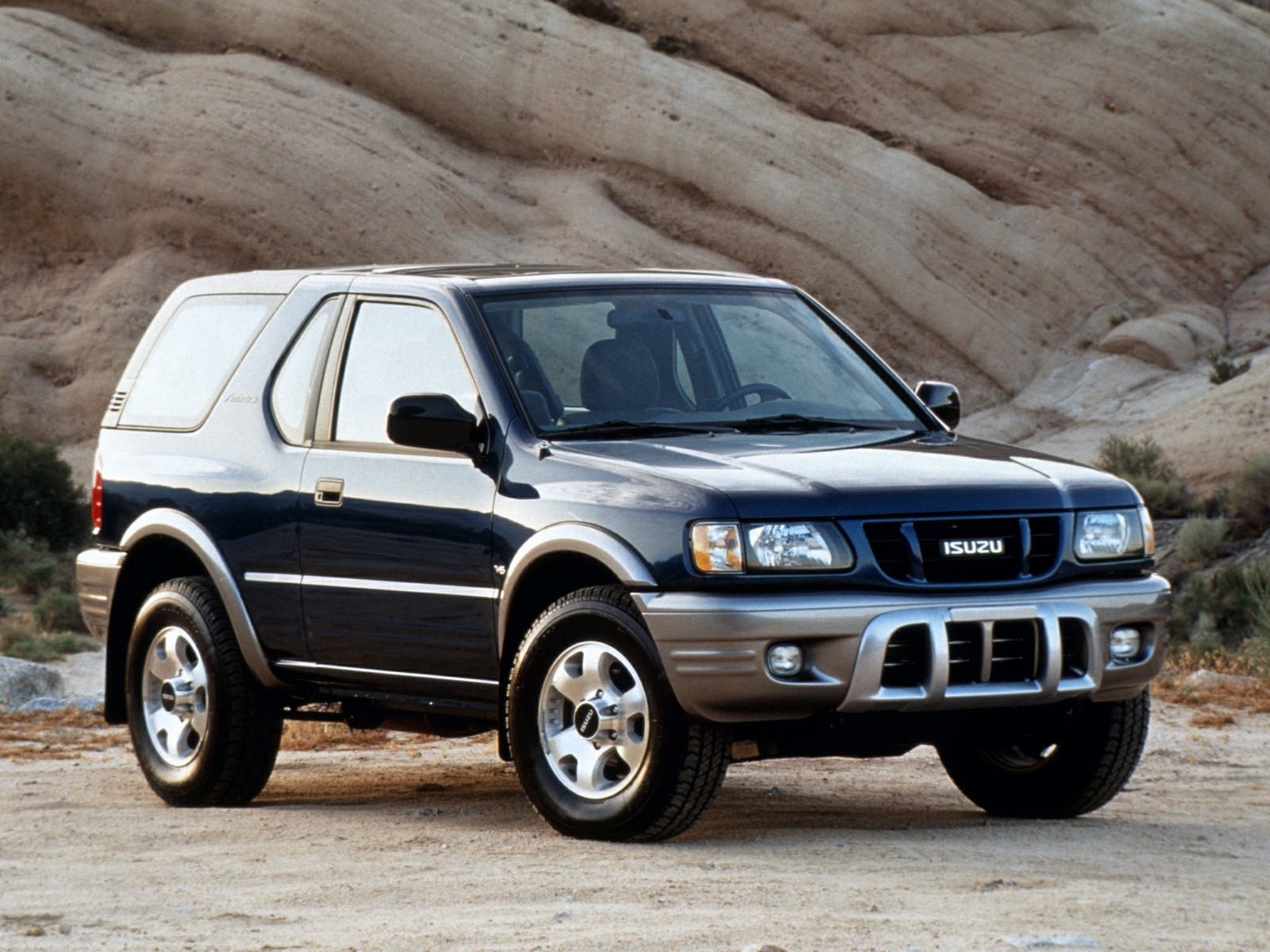

Isuzu launched the second generation of the Amigo in 1997 at the Tokyo Motor Show and unveiled it for the North American market in…
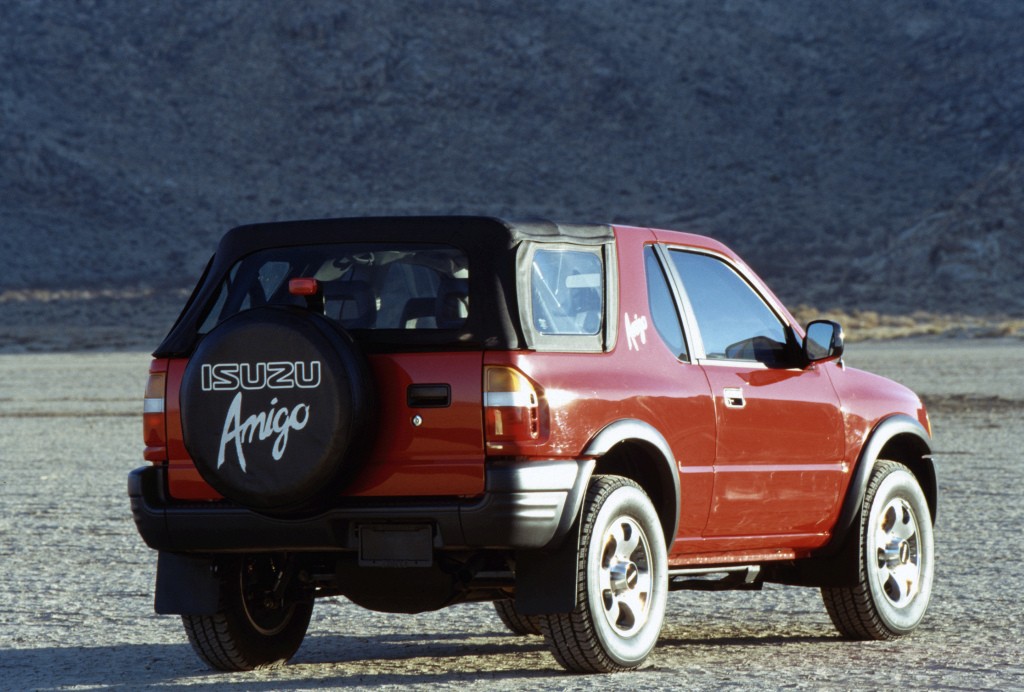
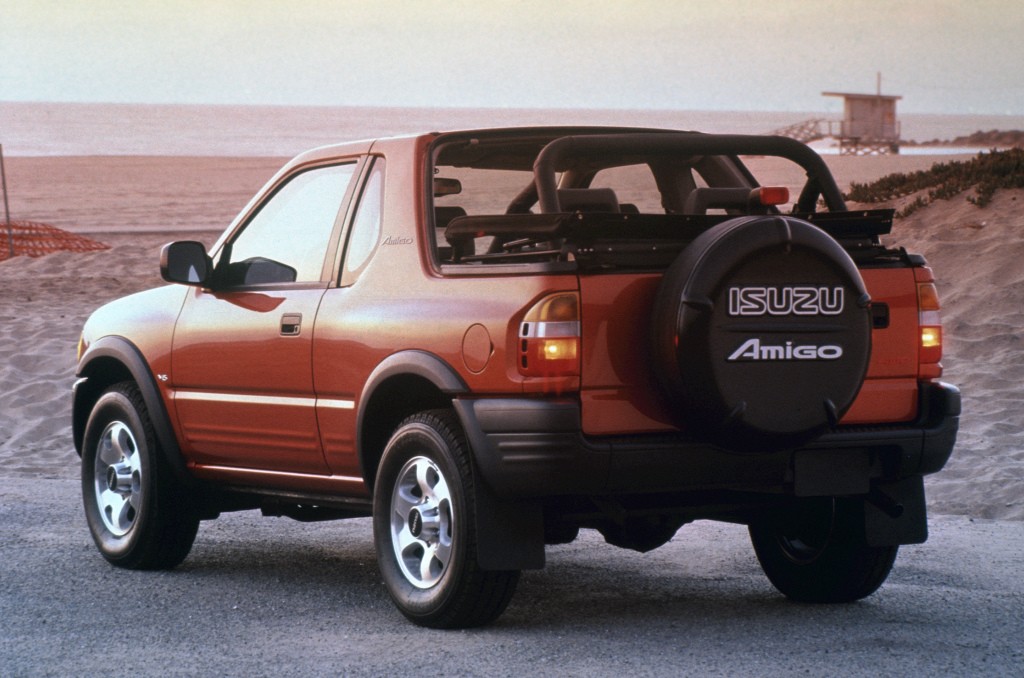
Isuzu launched the second generation of the Amigo in 1997 at the Tokyo Motor Show and unveiled it for the North American market in the following year as a convertible, soon followed by a hard-top variant.
The return of the Amigo was seen by many as a pleasant surprise. It was one of the few vehicles in its category that relied on the body-on-frame type of construction, while most of the contenders in the compact SUV segment had already switched to unibody solutions. Furthermore, Isuzu offered the Amigo an independent front suspension, which made it more comfortable for regular drives, although it was not as solid as the Wrangler while offroading. One of the most significant upgrades over the previous generation was the introduction of the shift-on-the-fly feature, which allowed drivers to engage 4WD from 2WD while driving just by pushing a button.
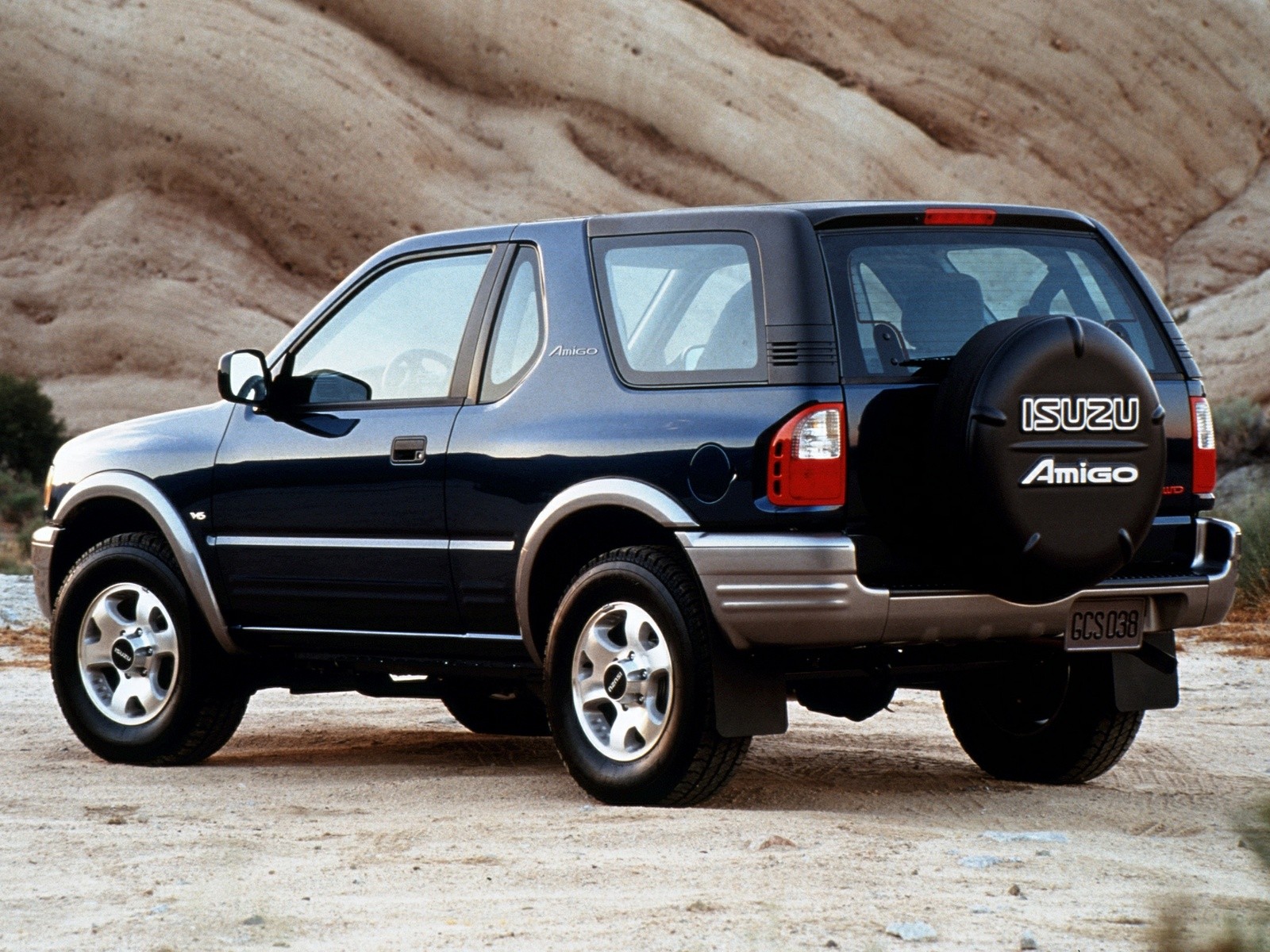
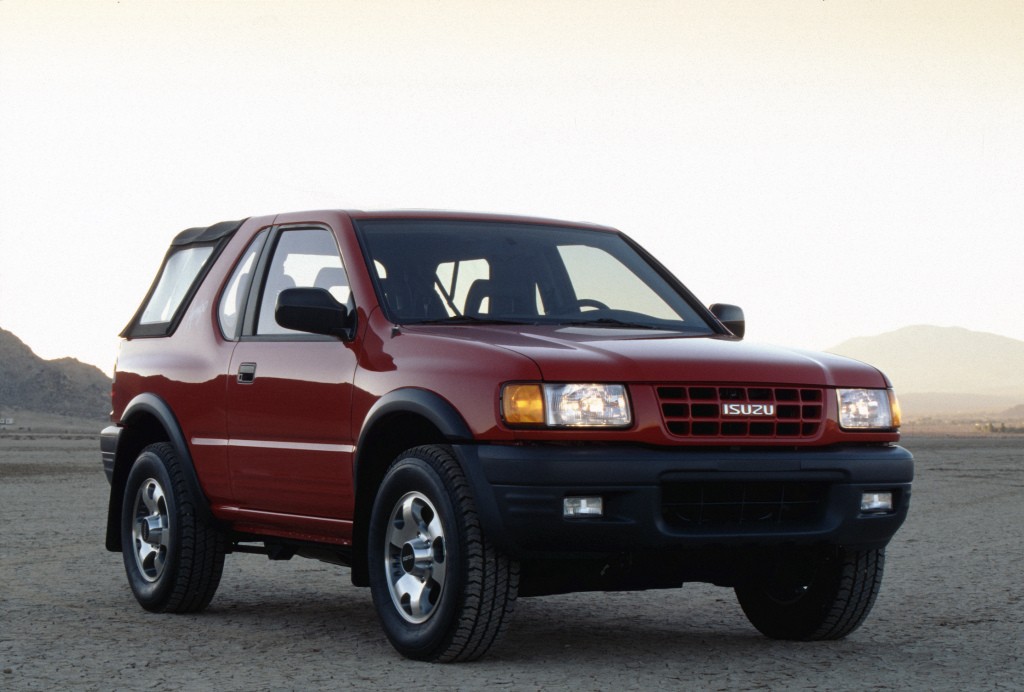
The 1999 Isuzu Amigo 3 Doors surprised customers with its bold new styling and was a significant contender in its segment. Its rectangular headlights flanked a black, egg-crate-style grille where the brand’s badge took center stage. Isuzu installed a black or a silver bumper below them, with available rectangular fog lamps. In addition, the flared wheel arches created a more muscular look to the car.
While the 1998 Isuzu Amigo was available exclusively with a retractable roof in the back, for the 1999 model year, the automaker added a hard-top option. Thanks to the removable top, customers could use the vehicle during winter or bad weather without fearing the elements. From its profile, the raked windshield and the triangular-shaped B-pillars tilted forward created a sporty look for the car. In addition, the automaker installed flared rear quarter panels echoing those from the front. The curved door panels had black, rectangular door handles flush with the bodywork. At the back, the automaker placed the spare wheel outside, behind the rear door, on a cradle.
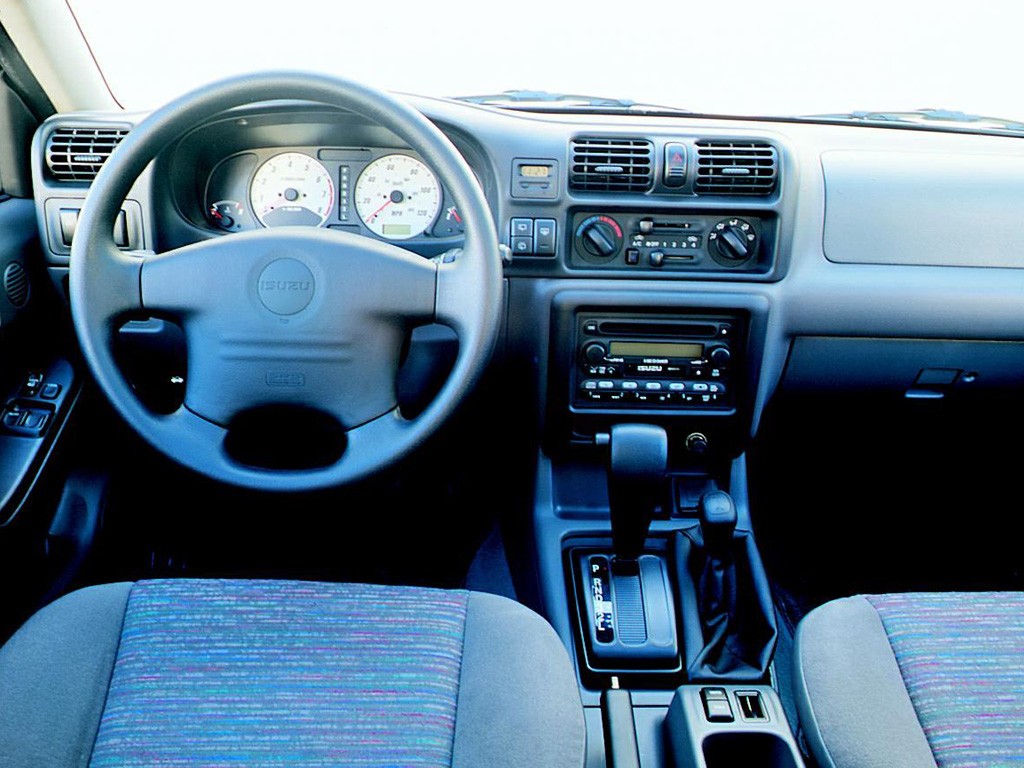
Isuzu created a car-like interior with curved lines for the dashboard. The steering wheel framed a rounded-shaped instrument cluster with large dials for the tachometer and speedometer and smaller gauges for the coolant thermometer and the fuel level. The stereo and the HVAC control panel were placed on the center stack. Like its open-top sibling, the 1999 Isuzu Amigo 3 Doors featured bolstered front seats and a flat-folding bench seat for two in the back, followed by a tiny luggage space.
Under the hood, the 1999 Isuzu Amigo 3 Doors was available with a choice of two gasoline engines. The base model was motivated by a 2.2-liter inline-four produced by Holden in Australia, while the latter was a 3.2-liter made by Isuzu. The former version was available as a 4×2, while the latter was offered exclusively as a 4×4. Both versions were available with a
Under the hood, the base version was powered by a Holden-built 2.2-liter inline-four engine. In addition, Isuzu offered a more potent 3.2-liter V6 powerhouse. The former version was paired exclusively with a five-speed manual transmission, while the latter was available with a four-speed automatic as well. Both versions were fitted as standard with a 2WD, while the 4WD was an option.
Begijnhof, 8000 Brugge, Belgium
Begijnhof, 8000 Brugge, Belgium

Begijnhof, 8000 Brugge, Belgium

Begijnhof, 8000 Brugge, Belgium

Begijnhof, 8000 Brugge, Belgium
Begijnhof, 8000 Brugge, Belgium
Begijnhof, 8000 Brugge, Belgium
Begijnhof, 8000 Brugge, Belgium
Begijnhof, 8000 Brugge, Belgium

Begijnhof, 8000 Brugge, Belgium

Offer an price, more info or anything you want
Consumer reviews